
 Software Development
 Security Services
 Cloud Services
 AI Services
 Other Services














 TechMagic Academy


8 Most Successful Healthcare Startups in Europe to Watch in 2026
Last updated:6 January 2026

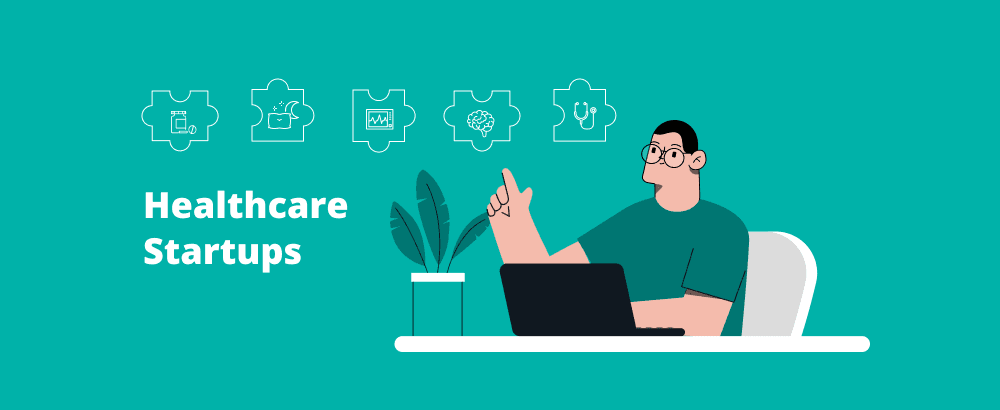
Custom healthcare software development started to gain momentum during the COVID-19 season and will continue to improve, changing the future of medicine.
The growing number of health tech startups in the industry highlights the importance of innovation in shaping the future of healthcare and addressing emerging challenges.
According to the HIMSS report, around 80% of health systems plan to increase their investment levels in digital healthcare in the next five years. We identified and create complete list of the most innovative healthcare companies in Europe to watch in 2026, from sleep monitoring devices to neurorehabilitation systems.
Similarly, several healthcare software development companies in USA are leading the way in delivering advanced digital health solutions tailored to local and global markets.
Key takeaways
- Europe continues to produce top healthtech startups in Europe across AI diagnostics, preventive screening, digital therapeutics, and medical imaging.
- AI is central to innovation in 2026, especially in diagnostics, imaging analysis, drug discovery, and workflow automation.
- Preventive care is gaining traction, with startups focusing on early disease detection and long-term chronic condition management.
- Clinical validation and regulatory compliance under EU MDR and GDPR are critical for market trust and scaling.
- The European digital health market is growing rapidly, with a projected CAGR of 22.3% from 2024 to 2030.
- The best health tech startups in Europe combine strong clinical evidence, scalable technology, and clear integration into existing healthcare systems.
Top Healthcare Startups in Europe
Europe continues to produce companies that rethink how care is delivered, diagnosed, and managed. Health tech startups across the continent are transforming healthcare delivery by leveraging innovation and technology to bridge the gap in healthcare access and equity.
Many of these startups are utilizing AI-driven research, precision diagnostics, and patient-centric health management to reshape healthcare delivery and improve patient outcomes. Below are several healthcare startups in Europe that are shaping new approaches to prevention, treatment, and patient support across the region.
MidMaze (Switzerland)
MindMaze is one of the top healthcare startups and is known as the global leader in digital neurotherapeutics. Its platform is designed to support patients with a range of neurological conditions, including brain injuries, stroke, Alzheimer’s, and Parkinson’s.
MindMaze uses VR and gaming technology to help patients recover brain function after strokes and neurological illnesses, leveraging machine learning algorithms to personalize rehabilitation and improve patient outcomes.
MindMaze delivers seamless digital assessments and therapeutics in more than twenty countries, with thousands of patients suffering from neurological illnesses. The platform allows them to obtain complex and high-quality neurorehabilitation in the safety and comfort of their homes.
Nurses and physicians play a crucial role in delivering and overseeing digital neurotherapeutic care, ensuring effective treatment and monitoring. Needless to say, how important it is in COVID-19 pandemic conditions when people with chronic illnesses form a separate group of risk.
In simple words, MindMaze is a collection of virtual reality products managed by healthcare specialists that help patients recover brain function and adapt to more or less normal life. It’s most widely used in rehabilitation patients after traumatic brain injury and stroke, with Alzheimer’s and Parkinson’s, and in those suffering from various phobias.
Today, MindMaze is a part of rehabilitation programs at such institutions as Mount Sinai Abilities Research Center, John Hopkins, Royal Buckinghamshire Hospital, and over 74 clinics and centers worldwide, and is one of the top healthcare technology companies in Europe.
CheckEye (Estonia)
CheckEye is a health tech startup focused on early detection of chronic diseases through AI-powered diagnostics and precision diagnostics using retinal image analysis. As an example of transformative HealthTech innovation, CheckEye leverages advanced artificial intelligence to analyze eye fundus images and identify early signs of conditions such as cardiovascular disease, diabetes, and kidney disorders.
AI-powered diagnostics like those used by CheckEye are improving the accuracy and speed of disease detection, enhancing patient outcomes by enabling earlier and more precise intervention. The solution uses artificial intelligence models trained to detect subtle patterns in retinal blood vessels.
These patterns often reflect systemic health issues before symptoms appear. By scanning the retina, healthcare providers can gain insights into a patient’s overall health during a routine eye exam.
CheckEye’s technology is designed to support primary care and preventive screening programs. It helps clinicians identify at-risk patients earlier and prioritize follow-up diagnostics. The process is fast, non-invasive, and can be integrated into existing ophthalmology or optometry workflows.
In practical terms, CheckEye turns a standard retinal image into a broader health screening tool. Instead of focusing only on eye conditions, the platform expands the value of eye exams by supporting early risk assessment for chronic diseases. This approach can improve prevention strategies and reduce the burden on healthcare systems through earlier intervention.
Icometrix (Belgium)
Icometrix, one of the best healthtech startups in Europe, specializes in AI solutions for medical imaging, with a focus on brain MRI and neurological disorders. The company develops software that helps clinicians analyze and interpret complex imaging data in a consistent and standardized way.
By leveraging AI and machine learning, Icometrix enables healthcare professionals to make more informed decisions by extracting actionable insights from imaging data. Its platform processes brain MRI scans to detect and quantify abnormalities linked to conditions such as multiple sclerosis, Alzheimer’s disease, and other neurological disorders.
The software measures brain structures, lesions, and atrophy, providing objective data that supports diagnosis and disease monitoring. The use of AI in the platform allows for more informed decisions in diagnosis and treatment planning, improving accuracy and supporting personalized patient care.
Icometrix integrates with existing radiology workflows and hospital systems. Clinicians receive structured reports that highlight relevant changes over time, helping them assess disease progression and treatment response.
Icometrix turns raw imaging data into measurable insights. By reducing variability in image interpretation, the platform supports more precise clinical decisions in neurology and research settings.
Owkin (France)
Owkin develops AI models that analyze large-scale patient datasets to improve diagnostics and support drug discovery. The company works with clinical, imaging, and molecular data to identify patterns that may not be visible through traditional analysis.
Its technology helps researchers and pharmaceutical companies understand disease mechanisms, predict treatment response, and stratify patient populations for clinical trials. By training models on diverse datasets, Owkin aims to generate insights that guide more targeted therapies.
Owkin also collaborates with hospitals and research centers to ensure models are trained on high-quality, real-world data. In some cases, the company applies federated learning approaches that allow institutions to contribute to model training without sharing raw patient data.
Owkin’s platform connects data science with biomedical research. By accelerating data analysis and improving predictive accuracy, it supports faster and more informed decision-making in both diagnostics and drug development.
Oura Ring (Finland)
Oura is one of the promising Finnish public health startups, most widely known for the Oura Ring — a small wearable device the user places on their finger. It uses sensors to provide real-time health insights. The infrared technology monitors temperature and blood flow, calories burned, and heart rate.
Oura’s smart ring technology monitors a wearer’s vital signs and lifestyle 24/7, enabling earlier detection of conditions. The device connects to the mobile app, so all the data is conveniently visualized and explained. Wearable technology like Oura is increasingly being used to monitor mental health and women's health, supporting early intervention and personalized care.
The ability to measure critical health data remotely – away from hospitals and doctors – is a significant advance for health systems. Such data increases convenience for users and means conditions can be detected earlier, which improves outcomes and protects vital centralized healthcare resources. Natera, for example, processes over 850,000 tests quarterly for oncology and women's health and uses AI models to personalize cancer treatment, demonstrating the growing impact of digital health solutions.
Gadgets created by Fitbit and Garmin have hugely impacted the sports and well-being markets. Oura enables consumers to wear comfortable, non-invasive, and affordable devices that provide real-time data on their health, solving a whole range of problems all at once.
Neko Health (Sweden)
Neko Health has developed a full-body scanning system for preventive health screening. The company combines advanced sensors, imaging technology, and AI-based analysis to collect and interpret large volumes of health data in a single visit.
The scan captures information about the skin, cardiovascular system, blood values, and other key health indicators. The process is non-invasive and takes only a few minutes. After the scan, clinicians review the results with the patient, providing personalized advice and recommendations based on the findings. This approach leverages AI-powered diagnostics and precision diagnostics to deliver actionable insights tailored to each individual.
Neko Health focuses on identifying risk factors and early signs of disease before symptoms appear. The system highlights patterns that may indicate conditions such as cardiovascular disease, metabolic disorders, or skin cancer. This supports earlier intervention and more informed decision-making.
In practice, Neko Health’s model combines technology with physician oversight. Patients receive structured results and recommendations based on measurable data, making preventive care more systematic and accessible.
Onera Health (Netherlands)
The creators of Onera Health modestly call their brainchild the future of sleep medicine. The purpose of the application is to analyze and gradually improve sleep quality.
One in five people struggles with sleep. The odds of being sleep deprived (less than 6 hours a night for adults) have increased significantly over the past 30 years as digital technology has firmly become part of our lifestyles and blurred the line between home and work. National data shows that poor sleep health is a common problem, with 25 percent of US adults reporting insufficient sleep or rest at least 15 out of every 30 days.
Onera is an at-home medical-grade sleep diagnostic patch system that helps monitor sleeping and the body's condition during the night. It's accurate, comfortable, wireless, intuitive, and as simple in use as possible. It singles it out among other digital health startups to watch related to sleeping problems. The system's main benefit is replacing some intimidating examinations and lab tests with its functions.
Liva Healthcare (Denmark)
Liva Healthcare provides an app-based health coaching program that helps patients manage chronic conditions. The platform connects individuals with certified health coaches who offer structured guidance on lifestyle changes.
The program focuses on conditions such as type 2 diabetes, obesity, and cardiovascular risk. Patients receive personalized plans that cover nutrition, physical activity, and behavioral support. Communication happens through a mobile app, where users can track progress and stay in regular contact with their coach.
Liva Healthcare combines digital tools with human support. Coaches review patient data, adjust recommendations, and provide accountability. This approach supports long-term behavior change rather than short-term interventions.
Our Experience in Developing Healthcare Startups
TechMagic has great experience delivering efficient and scalable health tech web and mobile applications of different complexities. We help develop innovative healthcare solutions by leveraging health data, predictive analytics, and personalized medicine frameworks, with support from organizations like EIT Health and the European Innovation Council.
We know the value of digitizing and automating medical workflows. Our healthcare software developers know how to build user-friendly and high-quality apps that streamline and automate processes and tasks.
Europe's HealthTech startups have historically leaned on public funding, with European founders often securing significant non-dilutive grants before turning to venture capital.
For example, we’re professionals in developing with Medplum, an open-source FHIR platform, which helps accelerate backend development for modern healthcare applications.
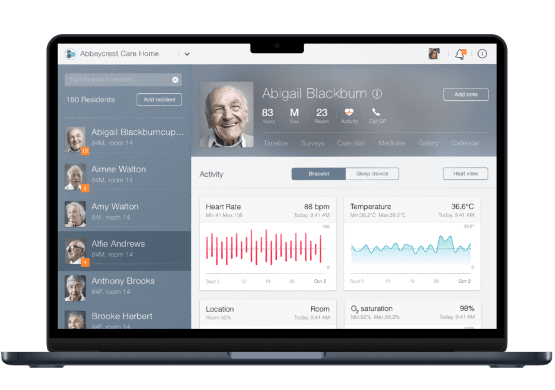
a Care home management app for E-type Care
PSHEALTH
Referral management & care coordination app
psHEALTH solution automates the referral management process with a connected software solution that takes healthcare logistics time, energy, and cost to deliver better patient care. With custom healthcare solutions like this, you can create your healthcare organization's program, provide access to licensed doctors online, offer laboratory results, support, consultations, and do much more.
Final Thoughts
Health tech in Europe is moving fast toward personalised medicine and healthcare innovation. In 2026, many startups and ventures are pushing care forward with AI-driven diagnostics, automated administrative workflows, and specialized virtual care that targets specific conditions and patient groups.
Many of these ventures were founded in leading hubs like Germany and the UK, each accounting for 28% of Europe's HealthTech 250, while the Netherlands stands out with around 10.8 health tech startups per million people. It is higher than Germany or France. The Dutch health tech sector also saw a record-breaking 1 billion euros in VC investment in 2021.
Growth comes with friction. Data privacy and GDPR compliance remain a core challenge, especially for products that process sensitive data across borders. Funding can also be uneven: many health tech startups still depend on public funding because private investment is limited, which can slow scaling.
Early-stage investment remains elusive for many ventures, as the HealthTech 250 confirms that only 11 ventures (26%) have raised Series A rounds in Europe. Sector-specific funds and prominent angels play a crucial role in supporting health tech startups, but the gap remains significant.
As a healthcare app development company, we provide our clients with consulting, development, intuitive health tech app design, and testing services, as well as post-release ongoing support. Our developers are here to deliver successful products in the medical, pharmaceutical, social care, and healthcare sectors.

FAQ

In 2026, success depends on three factors: clinical validation, regulatory readiness, and measurable outcomes. Investors and healthcare providers expect peer-reviewed evidence, clear compliance with EU regulations, and proof of cost or efficiency improvements.
A clear path to reimbursement and evidence that the product reduces time consuming clinical work also matter. Startups that can support many patients without adding operational burden are more likely to move beyond pilots and into routine care. Early traction often starts with a seed funding stage and credibility-building pilots, followed by a larger funding round once outcomes and adoption are proven.
The fastest-growing areas include AI-driven diagnostics, remote patient monitoring, preventive screening platforms, and workflow automation tools for providers. Solutions addressing chronic disease management and workforce shortages show sustained demand.
Medtech startups in Europe are also expanding in areas such as imaging analytics, wearable diagnostics, and minimally invasive technologies that integrate with digital platforms.
Start with evidence. Look for published clinical studies, pilot results with recognized healthcare institutions, and transparent methodology. CE marking under the EU Medical Device Regulation (MDR) is another key indicator for regulated products.
It is also useful to review advisory boards, partnerships with academic hospitals, and whether outcomes are independently validated rather than self-reported.
Countries such as Germany, France, the Nordics, and the Netherlands offer structured digital health frameworks, access to public healthcare systems, and established funding ecosystems. Germany’s DiGA pathway, for example, provides a reimbursement route for certain digital therapeutics.
The choice depends on reimbursement models, regulatory clarity, access to clinical partners, and availability of early-stage funding. Startups often pilot in one country before expanding across the EU market.